Scalp Acupuncture for Stroke in St Albans: A Complementary Rehabilitation Approach
CN
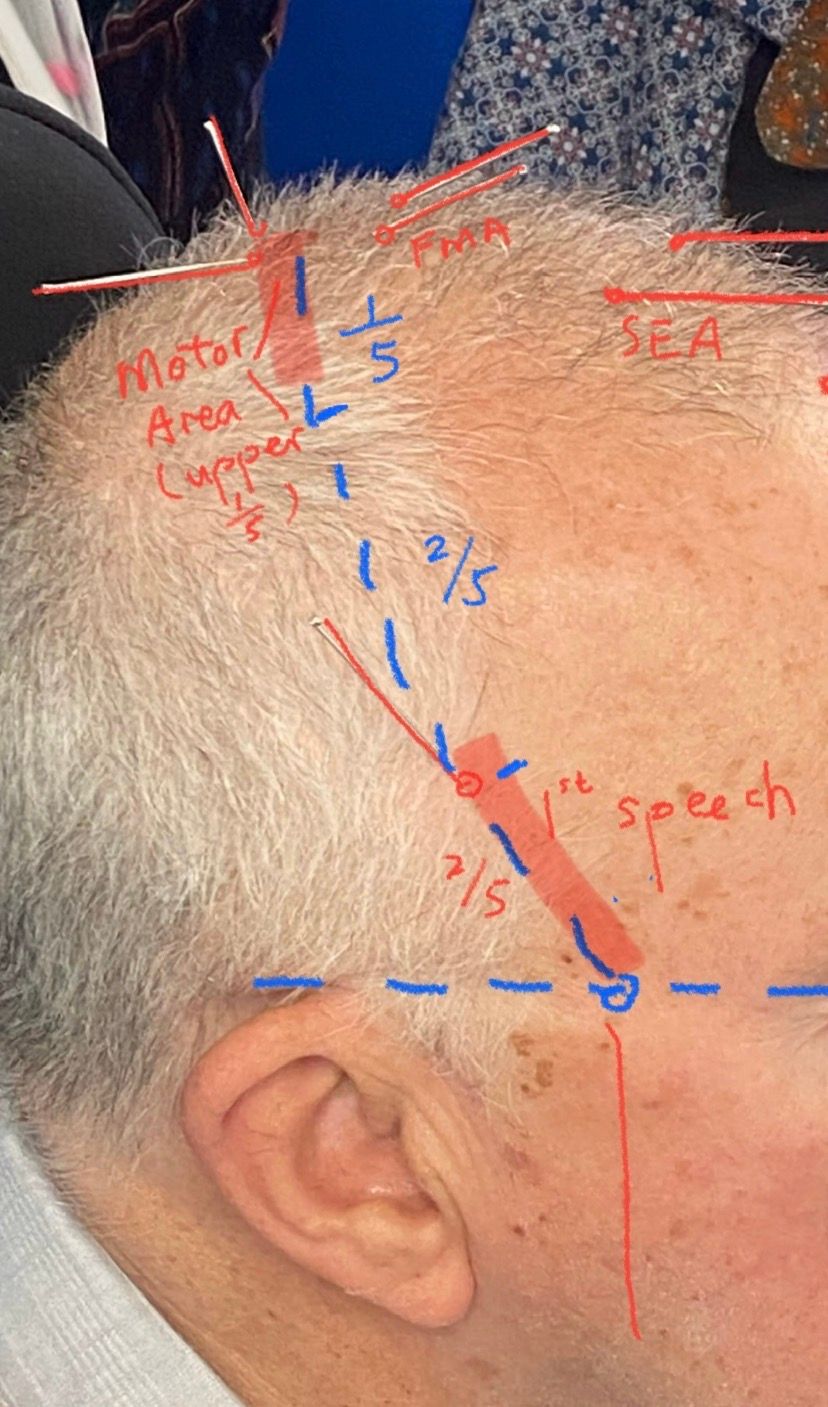
Scalp acupuncture is a specialised approach that works in close relationship with the nervous system. At Four Pillars Acupuncture in St Albans, this method is delivered within a structured, evidence‑informed framework.
It is commonly used in the management of chronic pain, migraine, and certain neurological symptoms. Scalp acupuncture may also support rehabilitation in cases such as post‑stroke recovery and motor coordination difficulties, and can be integrated as part of supportive care for individuals living with conditions such as Parkinson’s disease or cognitive decline.
The modern system of scalp acupuncture developed in the mid‑20th century through the integration of traditional Chinese needling techniques with contemporary understanding of brain function. Practitioners began mapping areas of the scalp to correspond with functional regions of the cerebral cortex, especially those associated with movement and sensation. This mapping distinguishes scalp acupuncture from general body acupuncture.
Unlike traditional acupuncture, which follows meridian pathways throughout the body, scalp acupuncture works across defined zones of the head linked to motor control, sensory processing, balance, and speech. Clinical literature has described it as a structured method often used in rehabilitation contexts. In practice in St Albans, it is approached cautiously and used as a complementary therapy alongside conventional medical care.
People seeking scalp acupuncture in St Albans often do so for persistent pain conditions. In chronic pain, the nervous system itself can become sensitised over time. Because scalp acupuncture corresponds with cortical sensory and motor regions, it may be considered when symptoms appear to involve central pain processing. Some patients report gradual shifts in pain intensity or improved regulation over a course of treatment, though responses vary.
Migraine is another reason individuals explore scalp acupuncture locally in Hertfordshire. Migraine involves complex neurological and vascular mechanisms. Scalp acupuncture may be incorporated into a broader management strategy aimed at nervous system regulation. It is not presented as a replacement for medical treatment, but rather as an adjunctive approach.
Internationally, scalp acupuncture has been used in neurological rehabilitation settings, including stroke recovery, multiple sclerosis symptom management, Parkinson’s‑related motor symptoms, and facial paralysis. In St Albans clinics offering this approach, treatment selection is based on functional presentation rather than diagnosis alone. Careful assessment remains central.
From a traditional Chinese medicine perspective, the head is described as the meeting place of the Yang channels and the residence of the “Sea of Marrow,” associated historically with brain function. These explanatory models use different language but share a focus on regulation.
Scalp acupuncture is generally considered safe when delivered by a properly trained practitioner. Patients under medical supervision are advised to maintain communication with their GP or consultant to ensure coordinated care.
Frequently Asked Questions About Scalp Acupuncture in St Albans
- What is scalp acupuncture used for?
Scalp acupuncture is most commonly used in presentations involving movement changes, altered sensation, chronic pain, migraine, and certain neurological symptoms. International clinical literature has described its application particularly in rehabilitation contexts. - Is scalp acupuncture different from traditional acupuncture?
Yes. Traditional acupuncture typically uses individual points along meridians across the body. Scalp acupuncture works with mapped zones on the head that correspond to functional areas of the brain, especially motor and sensory regions. - Can scalp acupuncture help after a stroke?
Scalp acupuncture is sometimes used as a complementary therapy in stroke rehabilitation. It does not replace medical treatment, but it may be integrated alongside physiotherapy and other rehabilitation strategies where appropriate.
Scalp Acupuncture for Stroke : A Complementary Rehabilitation Approach
Stroke is a significant neurological event that can affect movement, speech, sensation, and coordination. Early medical intervention is essential, and rehabilitation typically includes physiotherapy, occupational therapy, and speech therapy. In some settings, scalp acupuncture is used as a complementary therapy during the recovery phase.
Scalp acupuncture developed through the integration of traditional Chinese needling techniques with modern neuroanatomical mapping. Specific areas of the scalp correspond to motor and sensory regions of the cerebral cortex. In stroke rehabilitation, practitioners may select zones associated with the affected limb or function.
Clinical literature has described scalp acupuncture as being widely used in China for post‑stroke paralysis and speech difficulties. Reported outcomes vary considerably. While some case reports describe early changes in movement, most rehabilitation processes are gradual and require repeated sessions over time.
During treatment, fine needles are inserted into scalp zones corresponding to motor or sensory regions. In some cases, gentle movement of the affected limb is encouraged while the needles are in place. The intention is to support functional engagement rather than passive intervention.
It is important to maintain realistic expectations. Stroke recovery depends on multiple factors including the type of stroke, the extent of brain injury, age, general health, and access to rehabilitation services. Scalp acupuncture is best viewed as one possible supportive modality within a multidisciplinary approach.
For individuals in St Albans and Hertfordshire exploring complementary rehabilitation options after stroke, consultation allows for careful discussion of timing, safety, and suitability within an existing care plan.