Understanding chronic pain, nerve symptoms and fatigue through Traditional Chinese Medicine and modern neuroscience.
CN
Four Pillars Acupuncture in St Albans uses different languages to describe health, but together they encourage us to look beyond symptoms and consider the person as a whole.
When the Nervous System Becomes Sensitive
Our nervous system constantly receives information from the body. Sensory nerves detect temperature, pressure, movement and potentially harmful stimuli, transmitting signals towards the spinal cord and brain.
Normally, these systems help us respond appropriately to our environment.
However, following injury, inflammation or prolonged pain, some nerves can become more sensitive. In other circumstances, changes in spinal cord and brain processing may amplify the experience of pain.
This is sometimes described as sensitisation.
A person may experience burning sensations, pins and needles, shooting pain or discomfort from an otherwise gentle touch.
Conditions such as persistent lower back pain, sciatica and fibromyalgia may involve different combinations of tissue injury, nerve dysfunction and altered pain processing.
Importantly, pain intensity does not always reflect the extent of physical damage.
Understanding this helps explain why treatment should consider more than the location of pain.
The Traditional Chinese Medicine Perspective
Traditional Chinese Medicine (TCM) approaches these symptoms through a different framework.
Rather than diagnosing solely by the location of pain, we assess the individual's overall pattern of health.
In TCM, persistent pain or numbness may be associated with obstruction of Qi and Blood within the channels. Other presentations may involve underlying deficiencies of Qi, Blood, Yin or Yang, or the accumulation of Cold, Dampness or Phlegm.
For example, two people experiencing similar lower back pain may have very different presentations.
One may feel worse in cold weather, with stiffness that improves with warmth. Another may experience burning pain, disturbed sleep and heightened sensitivity to touch.
Although their symptoms overlap, their TCM patterns—and therefore their acupuncture treatments—may differ.
Assessment may include questions about sleep, digestion, energy, emotional wellbeing and temperature preferences, alongside observation of the tongue and pulse.
Why Scalp Acupuncture?
Scalp acupuncture is a specialised approach that forms an important part of clinical practice in Four Pillars Acupuncture.
Within Traditional Chinese Medicine, the head is regarded as a meeting place of Yang channels, while the Brain is traditionally described as the Sea of Marrow.
Modern scalp acupuncture systems also identify treatment areas associated with sensory and motor functions.
This has encouraged interest in scalp acupuncture as a supportive approach for people experiencing persistent pain, altered sensation and certain neurological symptoms.
From a neuroscience perspective, acupuncture stimulation activates sensory pathways that communicate with the spinal cord and brain. Researchers continue to investigate how these inputs may influence pain-modulating networks and other physiological processes.
Electroacupuncture: Understanding the Electrical Signals
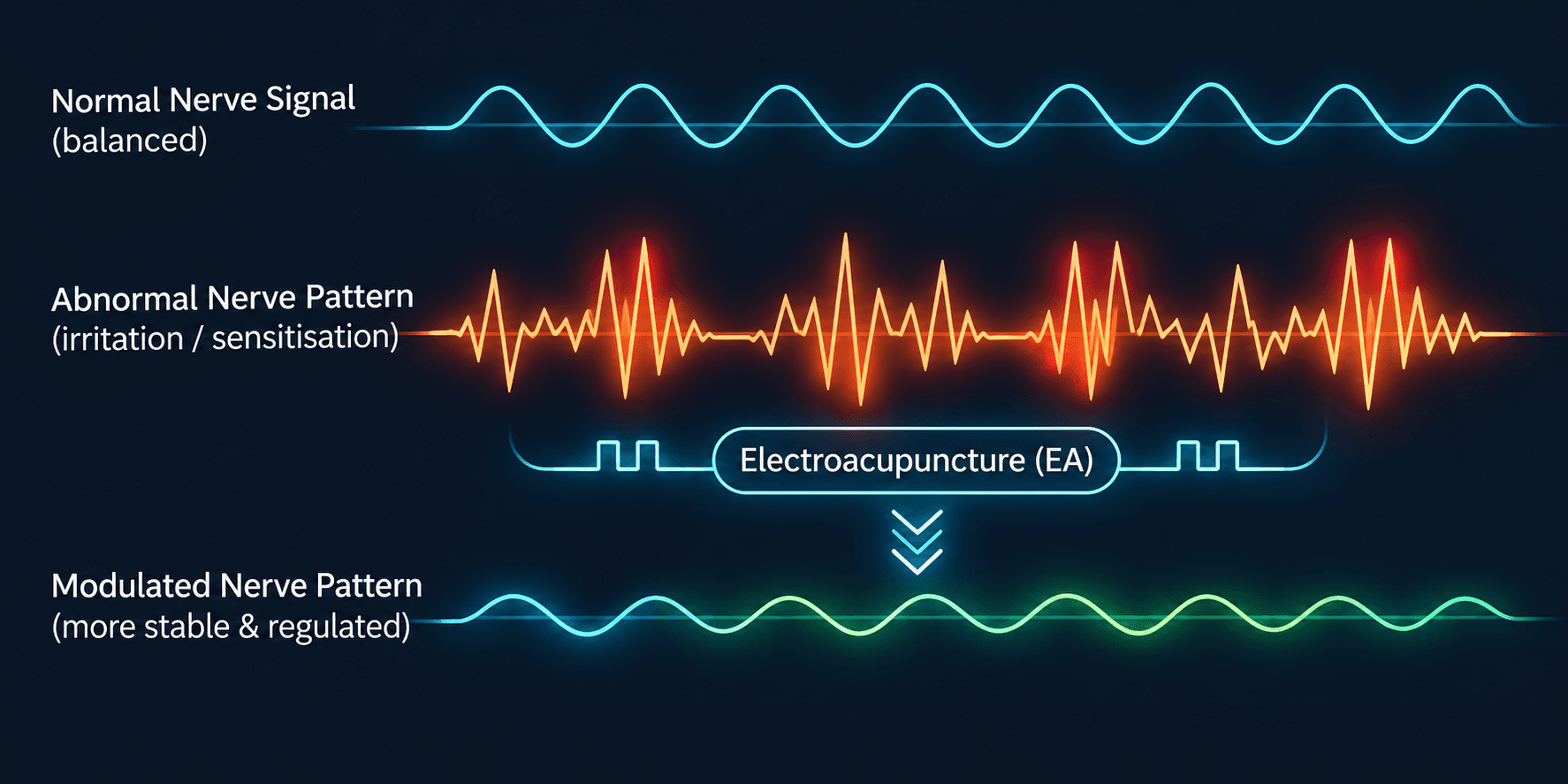
Our nerves communicate through electrochemical signals. When a nerve becomes irritated, its signalling may become abnormal, contributing to sensations such as tingling, burning or shooting pain.
Electroacupuncture does not remove harmful electricity from the body or physically reconnect damaged nerves.
Instead, it provides patterned sensory stimulation that may influence how pain signals are processed within the nervous system.
This can involve spinal and brain-based pain-modulatory pathways.
Importantly, stronger stimulation is not always better.
For someone with fibromyalgia or a highly sensitive nervous system, even gentle stimulation may feel intense. Treatment therefore needs to respect the individual's comfort and response.
Chronic Fatigue: Understanding the Whole Person
Chronic fatigue is another area where individualised assessment is particularly important.
Persistent exhaustion can arise from many different medical conditions, including sleep disorders, nutritional deficiencies and systemic illness.
In ME/CFS, people may also experience post-exertional malaise—a delayed worsening of symptoms following physical, mental or emotional activity.
Traditional Chinese Medicine may interpret some fatigue presentations through patterns such as Spleen Qi deficiency, Kidney deficiency or Dampness, depending on the wider clinical picture.
The Spleen and Stomach are traditionally regarded as the foundation of postnatal Qi, reflecting the importance of nourishment and the body's ability to sustain daily function.
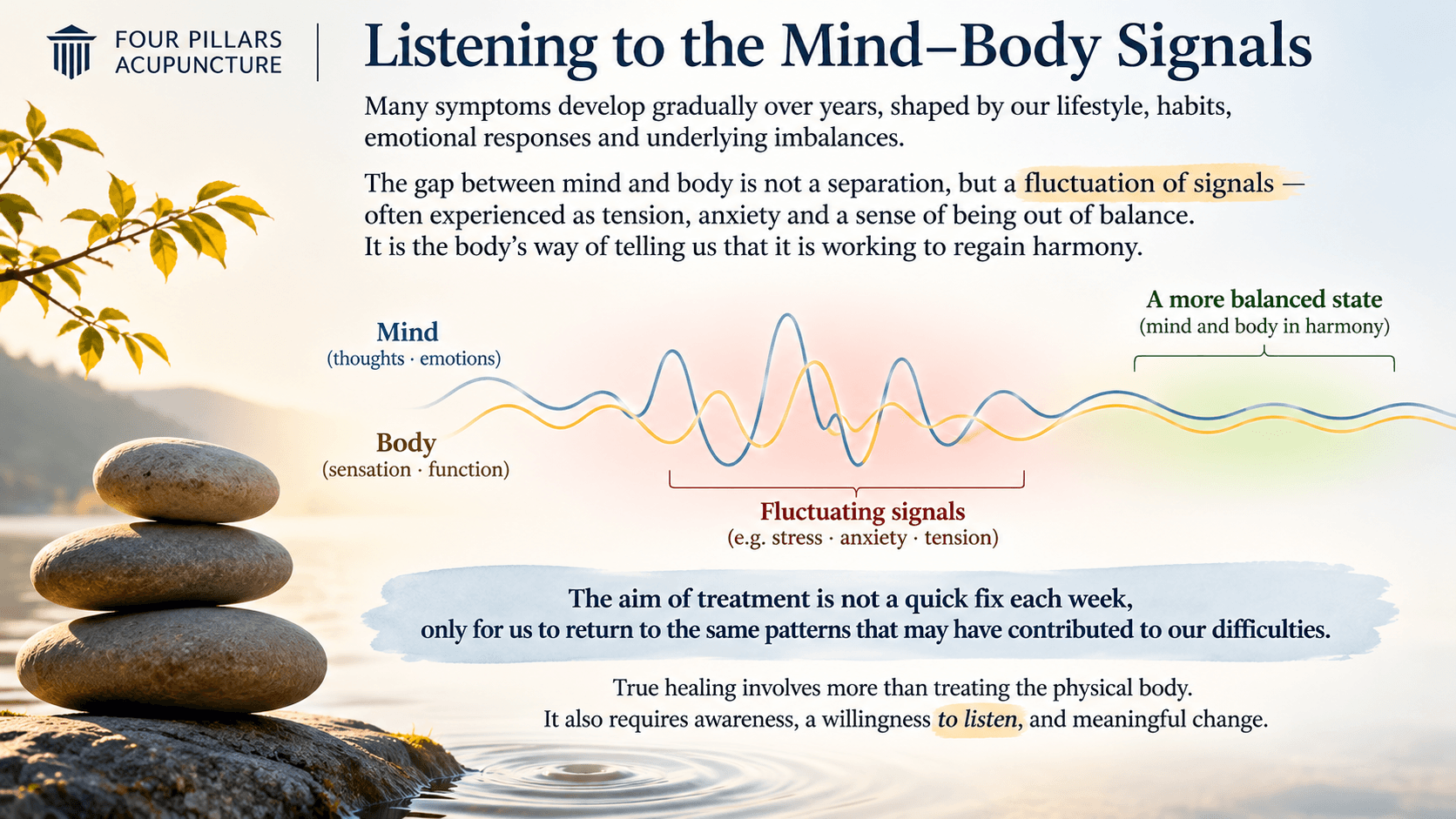
Many symptoms and chronic conditions develop gradually over years, often influenced by our lifestyle, habits, emotional wellbeing and underlying health.
The aim of treatment is not simply to provide a quick fix each week, only for us to return to the same patterns that may have contributed to our difficulties.
True healing involves more than treating the physical body. It also requires awareness, understanding and a willingness to make meaningful changes.
When we treat the body without engaging the mind, we risk leaving the underlying patterns unchanged. Over time, this disconnect may continue to affect our health and wellbeing.
Treating the Person, Not Simply the Symptom
In my practice, I may combine body acupuncture, scalp acupuncture and electroacupuncture according to the individual's presentation.
But treatment is never determined by a diagnosis alone.
I consider how symptoms affect sleep, movement, energy, emotional wellbeing and everyday life. I also pay attention to how someone responds during treatment and afterwards.
Sometimes a patient becomes deeply relaxed. Another may remain alert throughout. Neither response, by itself, determines whether treatment has been beneficial.
The mind and body are never truly separate. Between them flows a constant exchange of signals, sometimes harmonious, sometimes unsettled. Anxiety may be an expression of the body's struggle to regain balance. Rather than rushing to silence these signals, perhaps we should first learn to listen.
Four Pillars Acupuncture | St Albans
Traditional Chinese Medicine, Body & Scalp Acupuncture
Special interests in persistent pain, neuropathic symptoms, chronic fatigue and neurological rehabilitation support.